
.png)

Commercial Hydrogen Aviation: What Scales First, and Why It's Closer Than We Think
Olivia Sainsbury, Chief Executive Officer, Global Sales Distributor, Stellar Jet, Pre-Owned Aircraft
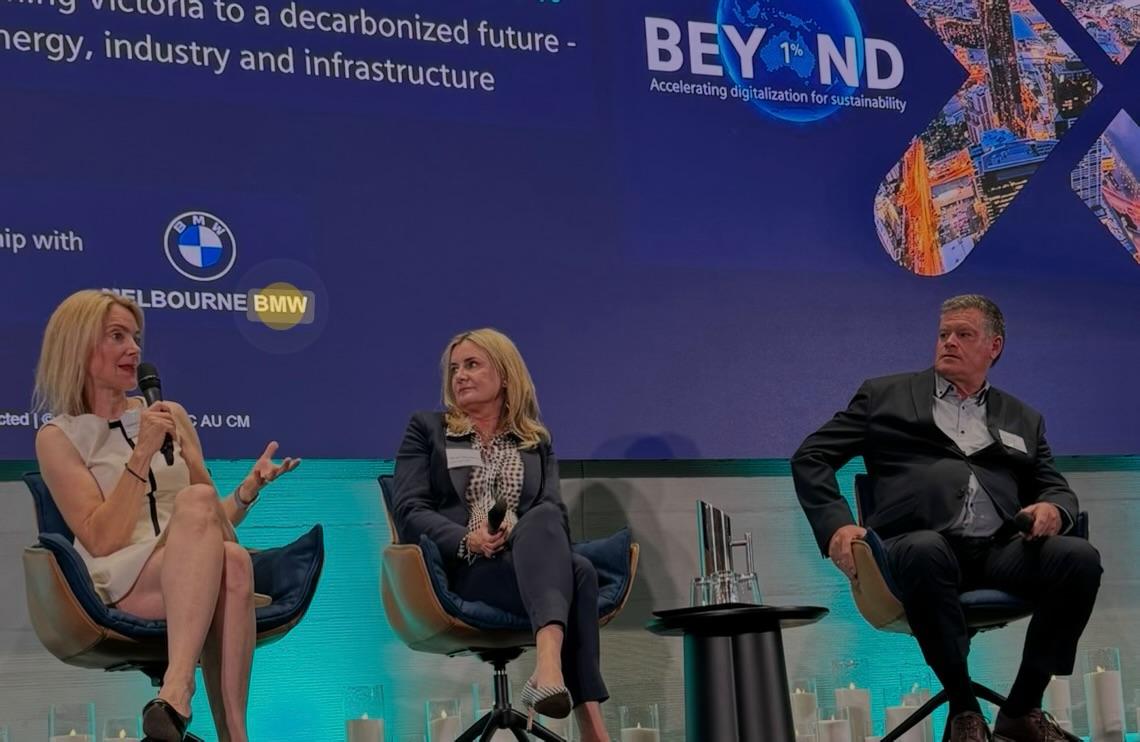
 At the 7th International Hydrogen Aviation Conference this month, Olivia Sainsbury made the case that the next chapter of hydrogen aviation will not be written by the largest aircraft. It will be written by the ones that can actually fly today.
Every conversation about hydrogen aviation used to start with the same assumption, that the technology has to prove itself at the top of the market first, on wide body jets, before it can matter anywhere else. At the 7th International Hydrogen Aviation Conference, I argued the opposite is happening.
The pressure is real, and it has moved from sustainability teams to purchasing
Regulatory and investor scrutiny on aviation emissions is intensifying across Australia, Europe, Southeast Asia and North America. What has changed recently is where the pressure lands. Buyers, from mining companies in Western Australia to corporate operators in Florida, are now asking about carbon accountability as part of procurement, not as a side conversation. Fuel independence has become a strategic argument in its own right across the Pacific Islands, Malaysia and Brazil, and in markets where hub and spoke aviation simply does not reach, point to point hydrogen aviation is a structural answer, not an aspirational one.
The headlines have been rough. The underlying picture is not
It would be easy to read the last two years as a retreat. ZeroAvia cut roughly half its workforce in early 2026 after a limited funding round. Airbus pushed its ZEROe target back by up to a decade. Universal Hydrogen collapsed in 2024. Fewer than five percent of major airports have even completed a preliminary hydrogen infrastructure feasibility study.
But those setbacks are concentrated almost entirely in large commercial aircraft. Regional and private aviation tell a different story, shorter routes, faster procurement cycles, and genuine operational demand rather than announcement driven demand. Boss n Queen and Stellar Jet have three confirmed customer sales in Australia, with the first aircraft destined for Queensland. Separately, a twelve aircraft Memorandum of Understanding is in place for the West Sale zero emissions airport project in Victoria, and there is an active pipeline across six markets: Australia, the Pacific Islands, New Zealand, Malaysia, Brazil and Florida.

The aircraft, built for the trade off nobody else has solved
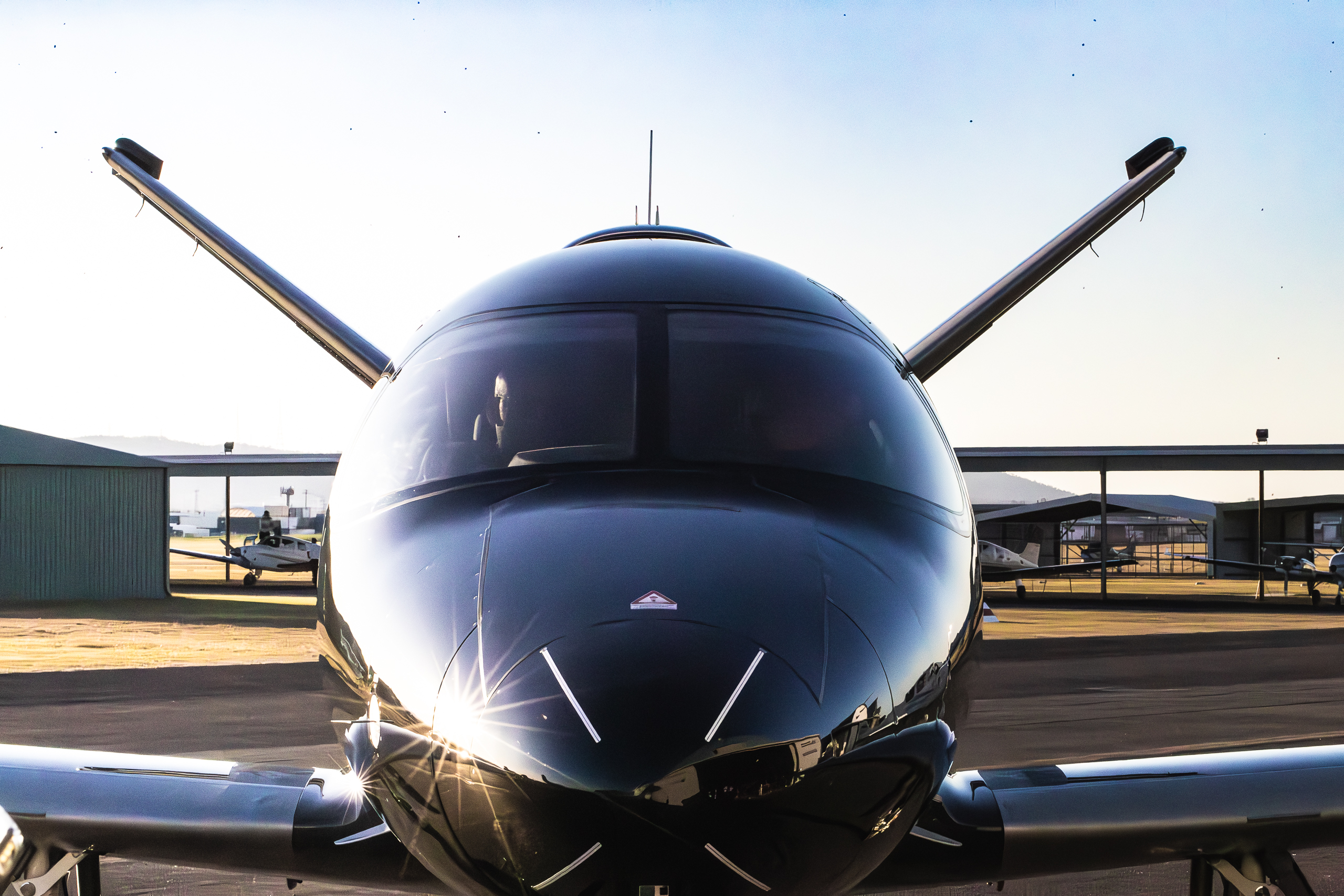
Stellar Jet is a hydrogen electric VTOL developed with BMW Designworks, with Leonardo on carbon fibre, Sauber F1 on wind tunnel testing and ALD on certification. The proposition is simple to state and hard to engineer. Fixed wing aircraft are fast and long ranged but need a runway, helicopters can land almost anywhere but are slow and short ranged, and Stellar Jet is designed to remove that trade off entirely, with zero emissions in operation and water vapour the only by product.
Where the demand actually is
The pattern repeats across every market in the pipeline. Medevac and mining access in remote Australia and the Pacific Islands, island chain connectivity across Indonesia, the Philippines and Malaysia, mining and agribusiness access across Brazil, Chile, Peru, Colombia and Argentina, and remote and seasonal connectivity across the Greek islands, Scottish islands and Norway. These are not speculative use cases. They are places where the current transport options are a long drive, an expensive charter, or no option at all.
Infrastructure is a design choice, not a blocker
The traditional assumption is that hydrogen aviation needs the full airport ecosystem built first. The emerging model is decentralised, mobile storage, solid state systems and modular refuelling at the point of operation, so deployment begins where the mission case is strongest rather than where the infrastructure happens to already exist. West Sale Airport in Victoria is the clearest working example of this in Australia. Boss n Queen and Stellar Jet have a Memorandum of Understanding with Marathon Group Australia and Siemens for a zero emissions airport development there, an MOU that includes twelve aircraft as part of the project, alongside a separate long term fly in fly out tender for an offshore wind project. It is an MOU stage commitment, and it is the clearest domestic proof point yet that the decentralised model has real backers.
SAF, e-SAF and hydrogen are not competing for the same job
Sustainable Aviation Fuel today, roughly 1.9 million tonnes in 2025, is a drop in fuel compatible with existing fleets and infrastructure now. e-SAF is the bridge, produced from green hydrogen and captured carbon, and a mandated volume pathway under EU targets rather than a niche product. Hydrogen is the transformation, requiring new aircraft architecture and new infrastructure models, but for remote Australia, the Pacific Islands and Brazil's interior, the long term case does not depend on when narrowbody aircraft catch up. The three pathways are complementary, and the transition needs all of them.
Where this leaves us
Hydrogen aviation will not be defined first by the largest aircraft. It will be defined by the first viable, commercially useful and operationally scalable ones. Regional and private aviation are the most credible early adoption pathway. Infrastructure is a design choice, and decentralised access models will determine how fast adoption moves across remote and island markets globally. Flight testing for the Stellar Jet demonstrator is scheduled for late 2026 in Europe, with the exact window to be confirmed once ground testing completes.
Hydrogen aviation will not be defined first by the largest aircraft. It will be defined by the first ones that actually work.
About Boss n Queen
Boss n Queen is Australia's premier aviation brokerage and global distributor of the Stellar Jet, the world's first hydrogen powered VTOL business aircraft. We work with corporate professionals, entrepreneurs, and high net worth individuals who understand that how you travel is as important as where you are going.


.webp)





_11zon.png)
.jpg)
_11zon.png)
